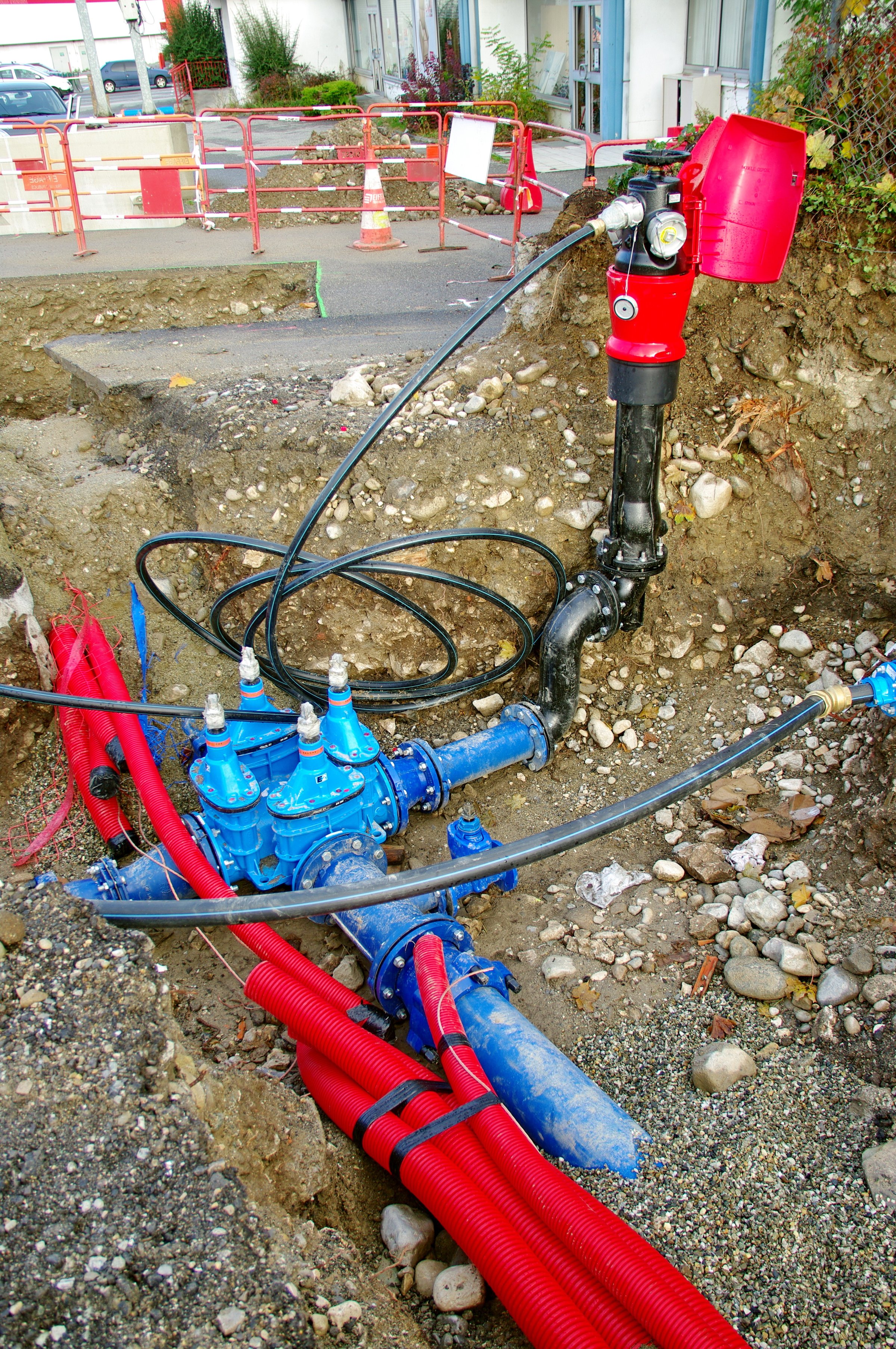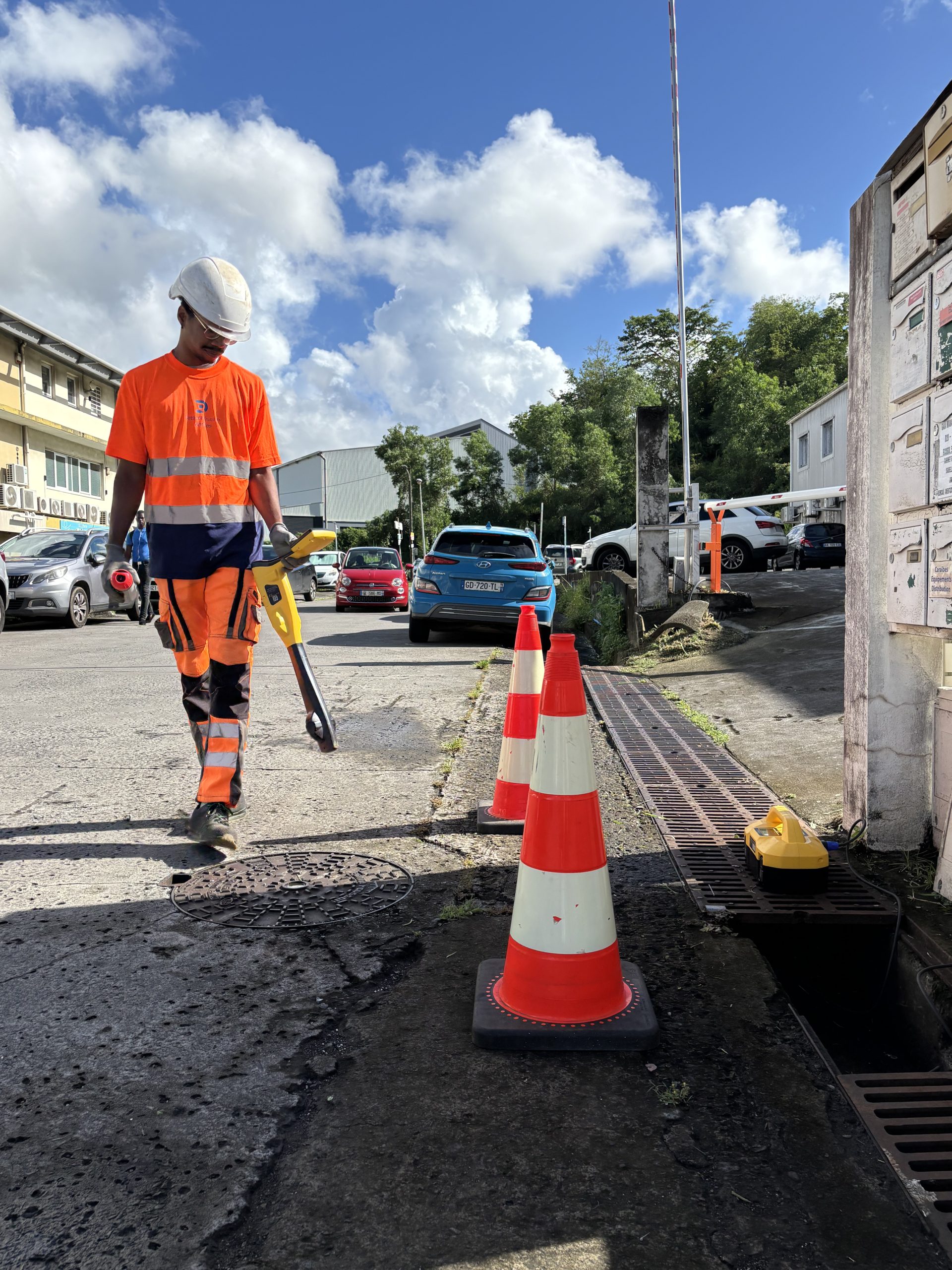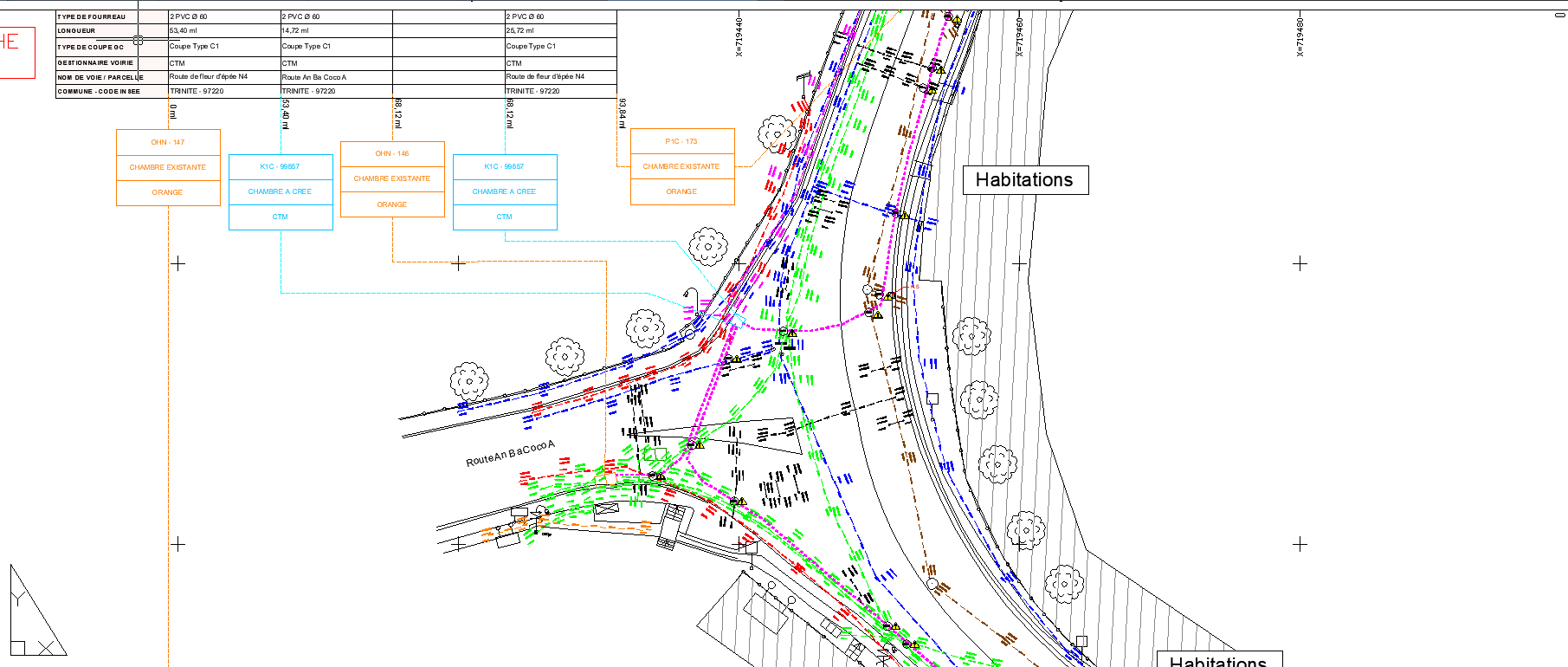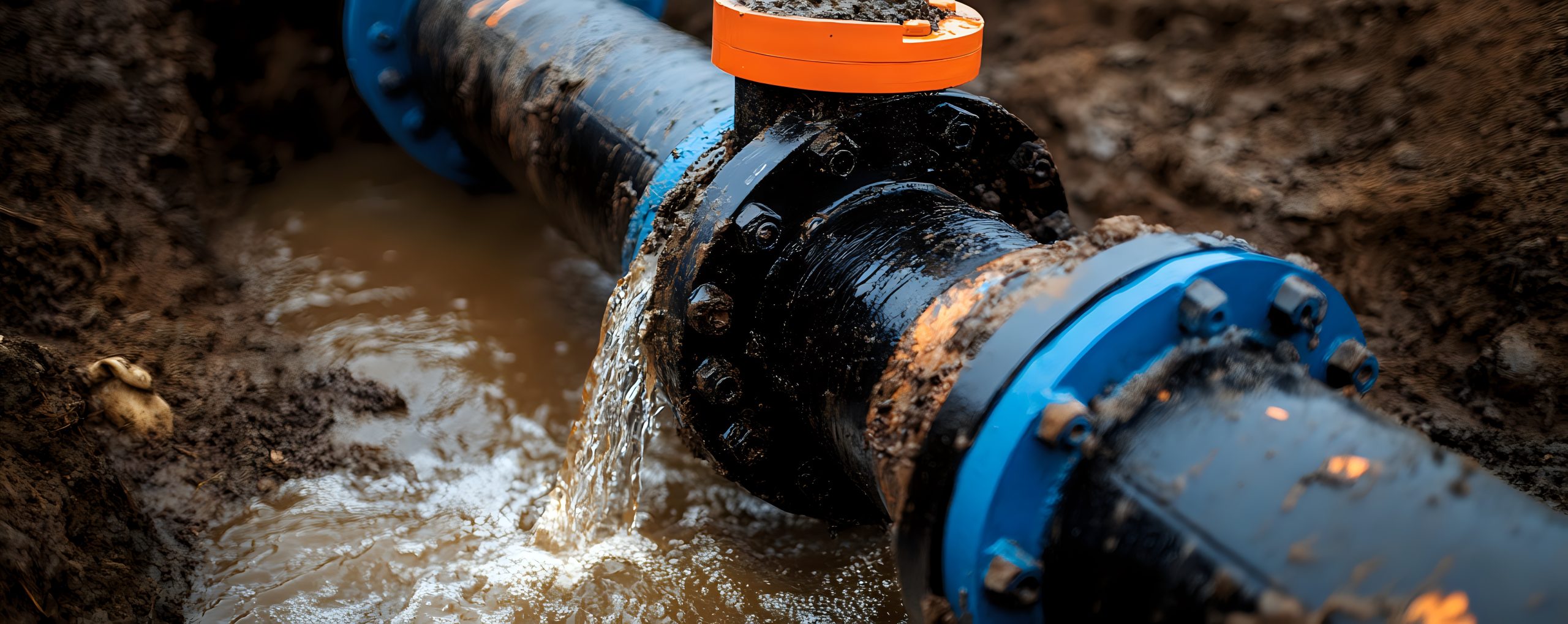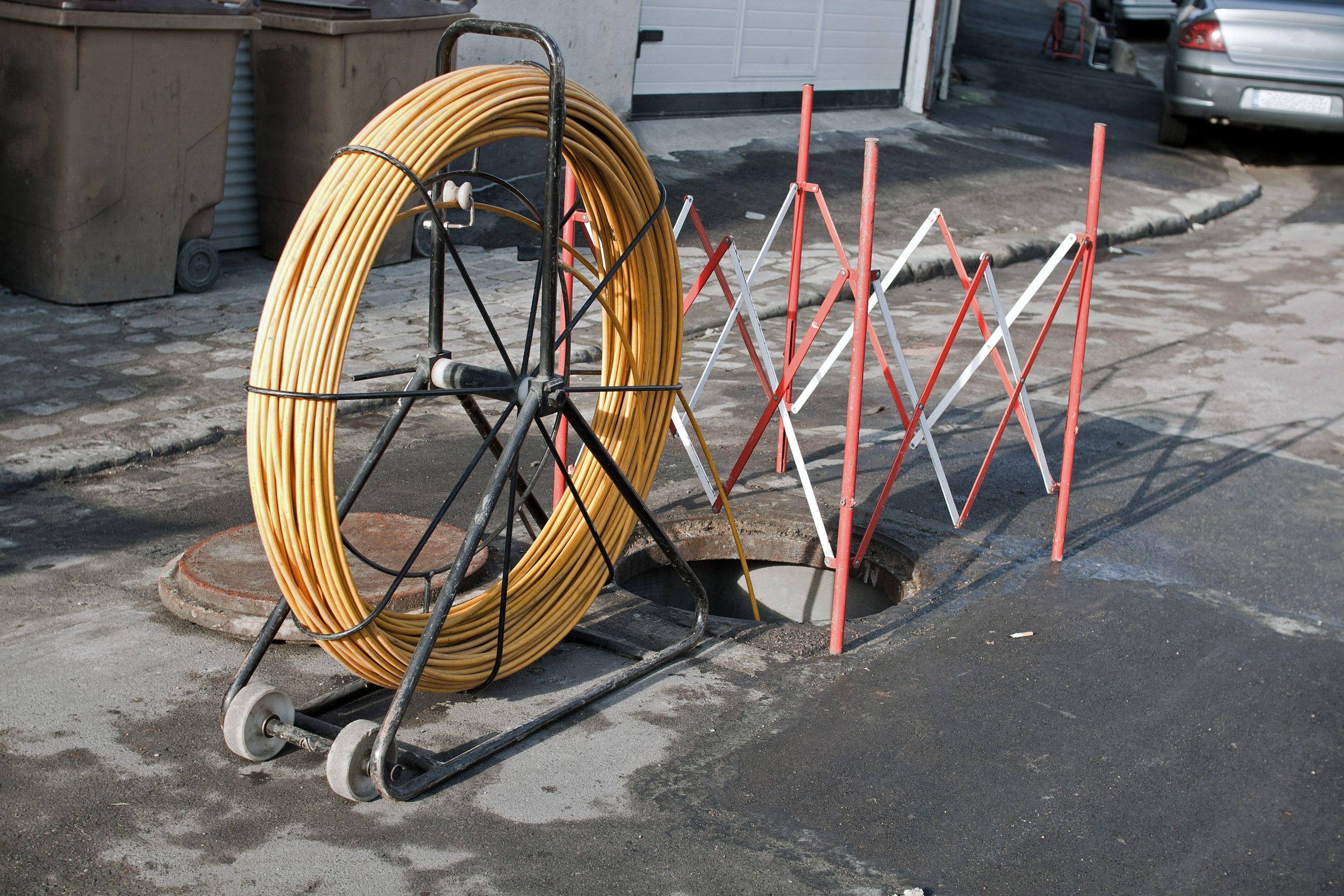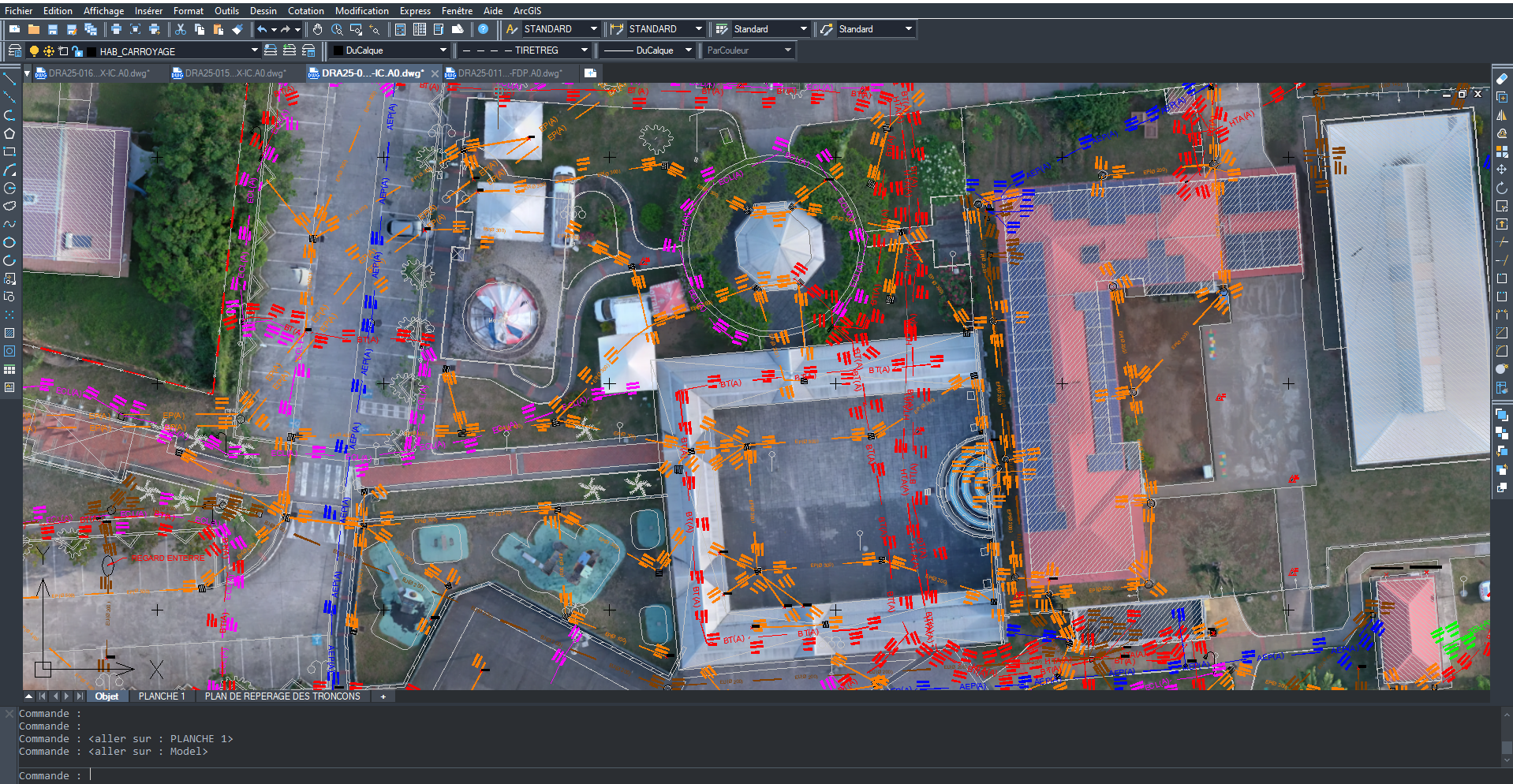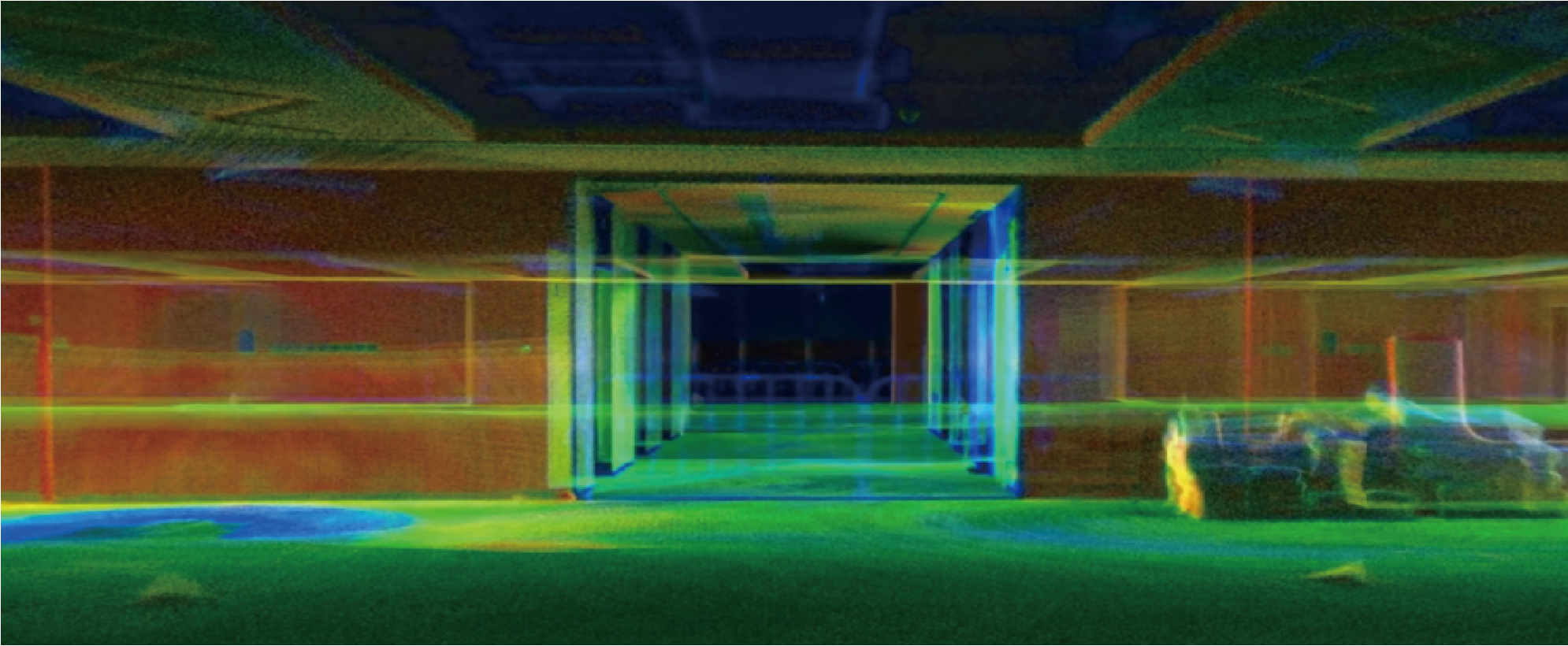
Five complementary areas of expertise to cover the entire diagnostic process for your buried networks, from field detection to mapping deliverables.

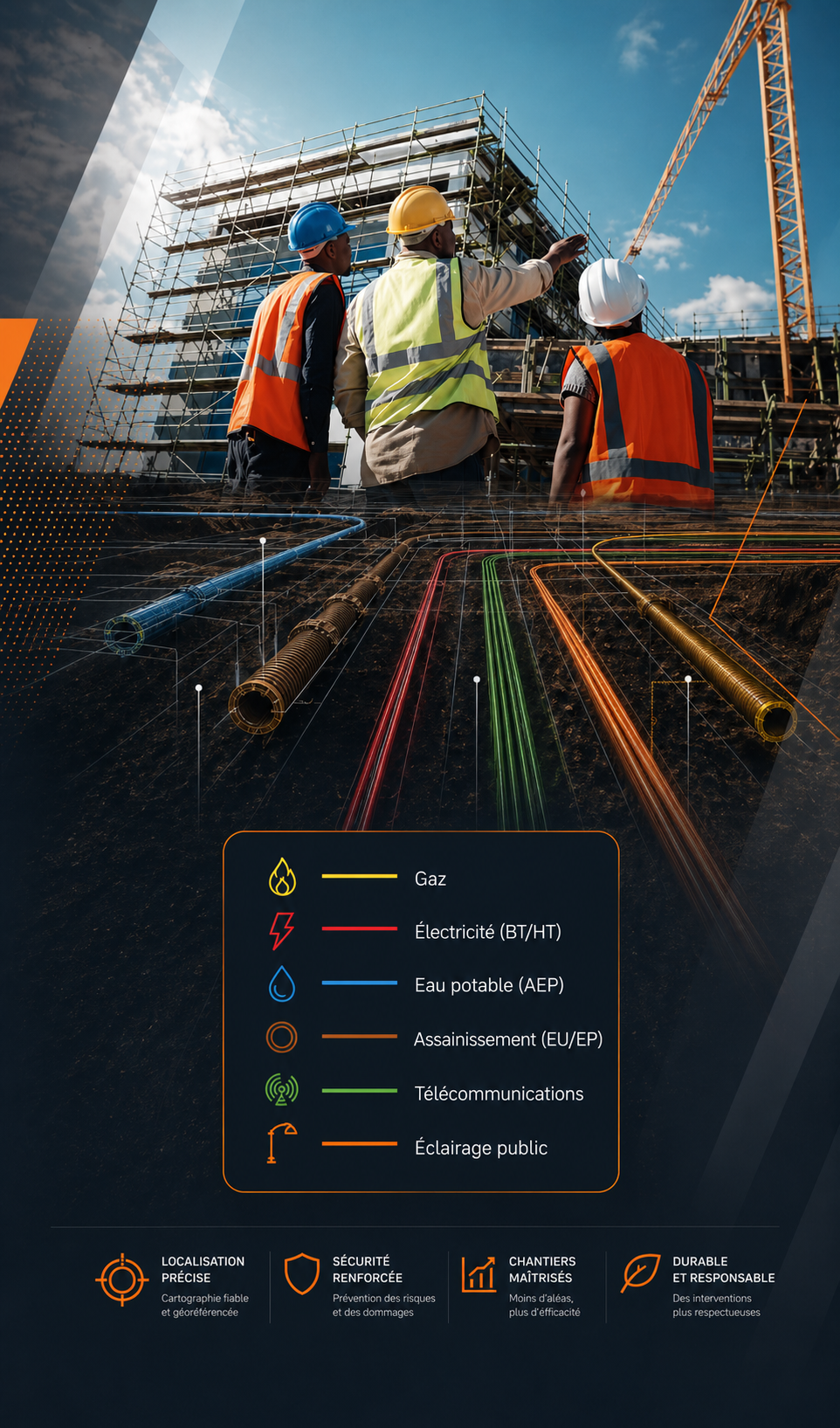
Complementary Investigation (IC) is a detection and georeferencing service performed during the project phase to precisely locate a buried network and bring it to Class A accuracy. Mandatory since the decree of October 5, 2011, for sensitive networks classified as B or C, it must be entrusted to a certified provider. It secures the construction site, protects the project owner, and prevents damage during work.
Depending on the nature of the network and field conditions, our surveys aim for Class A (uncertainty ≤ 40 cm) or Class B (≤ 1.5 m) accuracy. The class achieved is systematically documented in our mission reports.
Yes: drinking water (AEP), sanitation (EU/EP), electricity (LV/HV), telecommunications, public lighting, and gas networks. Our combined methods (electromagnetic induction + ground-penetrating radar) allow us to locate both conductive and non-conductive networks.
Yes. Our GIS deliverables are produced in Shapefile (SHP), GeoPackage (GPKG), or GeoJSON formats, georeferenced in the legal geodetic system of the French West Indies: RGAF09 (Réseau Géodésique des Antilles Françaises 2009), associated with the UTM zone 20 North projection (EPSG:5490), in accordance with Decree No. 2019-165 of March 5, 2019. This system covers all of Martinique, Guadeloupe, as well as Saint-Martin and Saint-Barthélemy. Our files are directly importable into QGIS, ArcGIS, and most professional GIS software used by local authorities and network operators.
Yes. We work with local authorities and operators under multi-year diagnostic and mapping update contracts, featuring scheduled campaigns and regular deliverables.
Contact us via the form or by email at contact@diag-reseaux.fr, specifying the intervention area, the type of networks involved, and the expected deliverables. We will send you a proposal as soon as possible.
Describe your needs: area of operation, type of networks, and scheduling constraints, and we will get back to you with a tailored study proposal or diagnostic mission.