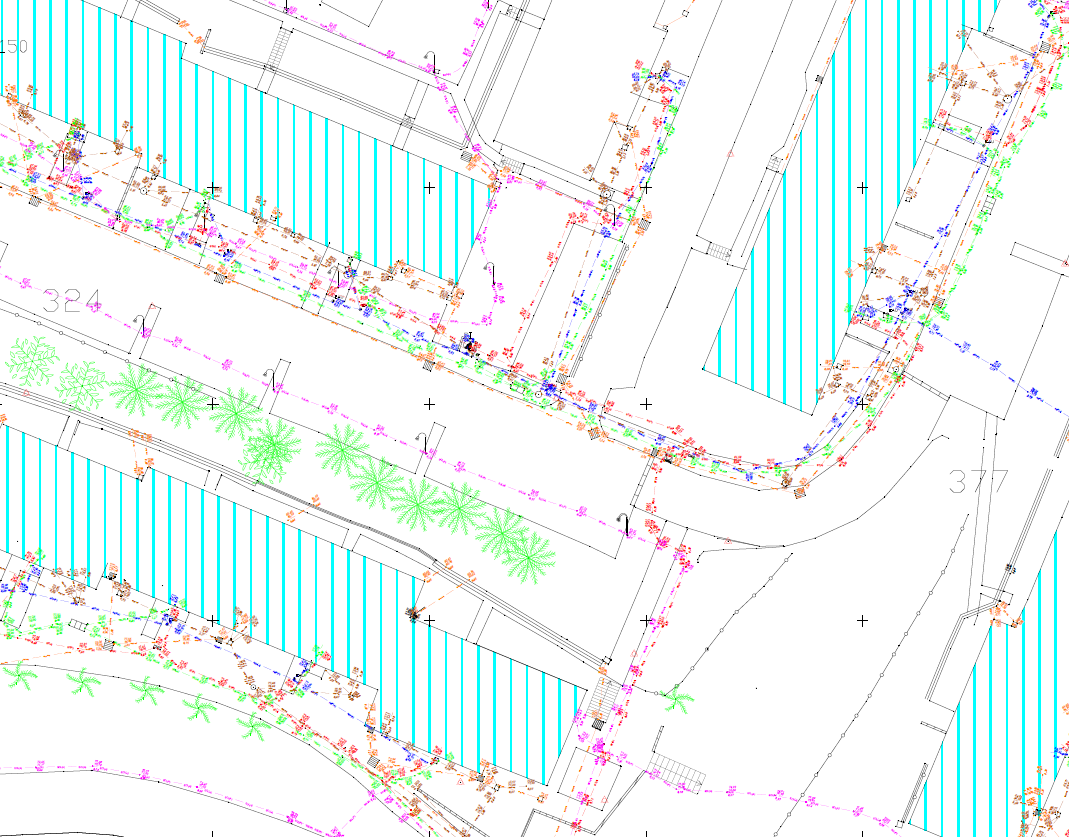



As part of a wastewater network rehabilitation program in the Sandy Ground district of Saint-Martin, the operator required a precise and comprehensive map of all utilities located within the future work area. The density of the underground infrastructure—including water supply, wastewater, stormwater, electricity, and telecommunications—combined with a lack of reliable mapping data, posed a high risk of damaging third-party utilities during excavation.
Before work could begin, a detection and ground-marking campaign was essential to secure the site and ensure the reliability of the rehabilitation project.
Diag Réseaux, utilizing the shared technical resources of Detect Réseaux, carried out a multi-utility detection and ground-marking campaign covering a total area of 3.5 km. The mission covered all utilities present within the project footprint, whether sensitive or non-sensitive.
The intervention combined several complementary techniques: electromagnetic detection for conductive utilities (electricity, telecommunications, metal water pipes), GSSI ground-penetrating radar for non-conductive utilities (PVC, HDPE, asbestos-cement), and surface feature inspection (manholes, valves, markers, pull boxes) to calibrate the detection against visible elements.
The on-site marking and staking was carried out in accordance with the NF S70-003 standard, strictly adhering to the standardized color code for each type of identified utility network.
The operator and the construction company were provided with a direct and clear visualization of the networks present within the project site, allowing them to begin excavation work safely. The preliminary detection and on-site marking made it possible toavoid any damage to third-party networks during the trenching phases, thereby securing the schedule and budget for the rehabilitation project.
On-site marking and staking of detected networks, compliant with the NF S70-003 standard and the standardized color code. A marking and staking report was provided to the operator and the construction company, certifying the nature, position, and estimated depth of the networks identified within the project area.